 BUY NOW, PAY LATER. Starting at 0% APR


Horsepower is the easy part. In the world of modern muscle, anyone with a credit card and a dream can bolt on a supercharger or a nitrous kit to see 700+ rear-wheel horsepower. But here is the reality check: power is useless if you can’t control it.
When you’re piloting a 4,400-pound Dodge Challenger or a heavy-hitting S650 Mustang, physics is your biggest enemy. Stopping that much mass creates an incredible amount of kinetic energy that converts instantly into heat. This leads every builder to the same crossroads: Do you stick with a solid 4-piston setup, or do you drop the cash on a massive 6-piston Big Brake Kit (BBK)?
At DTX Performance, your go-to modern muscle performance parts shop, we don't believe in selling you parts you don't need. We believe in building machines that perform. Let’s cut through the marketing fluff and look at the technical truth behind piston counts.
The Physics of Stopping Modern Muscle
Before we talk about pistons, we have to talk about heat. Braking is essentially a heat exchange process. Your brake pads squeeze the rotor, creating friction, which generates heat. A 6-piston kit isn't just about "more squeeze"; it's about better management of that thermal energy.
Modern muscle cars are heavier than ever. Unlike a 2,500-pound track toy, a modern Charger or Camaro generates enough heat during high-speed deceleration to literally glow the rotors red. If your brake system can’t dissipate that heat, you get brake fade: that terrifying moment where the pedal goes soft and the car keeps rolling.

4-Piston vs. 6-Piston: The Mechanical Breakdown
Most performance cars today come factory-equipped with 4-piston calipers. They are great. But when you move to a 6-piston setup, you are changing three critical factors: clamping force distribution, thermal mass, and pedal modulation.
1. Clamping Force and Piston Area
There is a common misconception that more pistons automatically mean more clamping force. This isn't always true. Clamping force is determined by the total surface area of the pistons and the hydraulic pressure from your master cylinder.
A well-designed 6-piston caliper uses staggered piston sizes. By having three pistons of varying diameters on each side, the caliper applies pressure more evenly across the entire surface of the brake pad. This prevents "pad taper": where the leading edge of the pad wears down faster than the trailing edge: and ensures the entire friction surface is doing work.
2. Thermal Mass: The Heat Sink Effect
A 6-piston kit almost always comes with a larger rotor. A larger rotor has more "thermal mass," meaning it can soak up more heat before it reaches a critical temperature. Think of it like a sponge; a bigger sponge holds more water. A bigger rotor holds more heat.
When you shop at a modern muscle performance parts shop like DTX Performance, you’re looking for kits that offer 15-inch or larger rotors. This extra diameter also provides more leverage, making it easier for the caliper to stop the wheel's rotation.
3. Pedal Feel and Modulation
This is where the 6-piston setup shines. Because the pressure is distributed across six points rather than four, the "feel" at the pedal is much more progressive. You can feel exactly how much grip you have left before the ABS kicks in. In a 4-piston setup, the transition from "slowing down" to "locking up" can feel much more abrupt.

When is a 6-Piston Kit Overkill?
Let’s be honest: for a daily driver that rarely sees speeds over 80 mph, a 6-piston big brake kit is mostly for "the look." If your car spends its life cruising to car meets and doing the occasional highway pull, a high-quality 4-piston setup with upgraded pads and rotors will stop you just fine.
You DON'T need a 6-piston kit if:
- You never plan on taking the car to a road course.
- Your car is a dedicated drag racer (where smaller, lighter "drag brakes" are actually preferred to reduce rotating mass).
- You are on a budget and still need to finish your cold air intake or exhaust setup.
When is a 6-Piston Kit a Necessity?
If you are pushing your car on a track, or if you live in an area with heavy elevation changes and aggressive mountain roads, the 6-piston kit is a safety requirement, not a luxury.
You NEED a 6-piston kit if:
- You Track Your Car: 20 minutes of hot laps will melt a standard 4-piston setup on a heavy car.
- High-Speed Stability: If you’re doing 1/2-mile racing or high-speed events where you need to drop from 160 mph to 40 mph quickly, you need the thermal capacity.
- Aesthetics and Wheel Fill: Let’s face it: nothing looks better behind a set of 20-inch wheels than a massive 6-piston caliper. If you’ve invested in a widebody kit, small brakes look out of place.

The Flex Factor: Caliper Rigidity
Another technical "truth" involves caliper flex. Cheap factory calipers are often "sliding" designs or two-piece bolted designs that can flex under extreme pressure. Most high-end 6-piston kits are "monoblock," meaning they are machined from a single solid piece of aluminum.
A monoblock caliper is significantly stiffer. When you step on the brake pedal, that energy goes directly into squeezing the pads, not into bending the caliper housing. This results in a rock-hard pedal feel that gives you the confidence to deep-brake into corners.
Beyond the Caliper: The Support Mods
Buying a 6-piston kit is a great start, but it’s only one part of the equation. To truly get the most out of your modern muscle performance parts, you need to consider the "supporting cast":
- Stainless Steel Lines: Factory rubber lines expand under pressure. Swap them for stainless steel to maintain that firm pedal feel.
- High-Temp Fluid: Even the best 6-piston kit will fail if your brake fluid boils. Use a high-quality DOT 4 racing fluid.
- Pad Selection: Choosing the right compound is vital. A track pad on the street will be noisy and won't work well when cold. A street pad on the track will disintegrate.
Building the Total Package
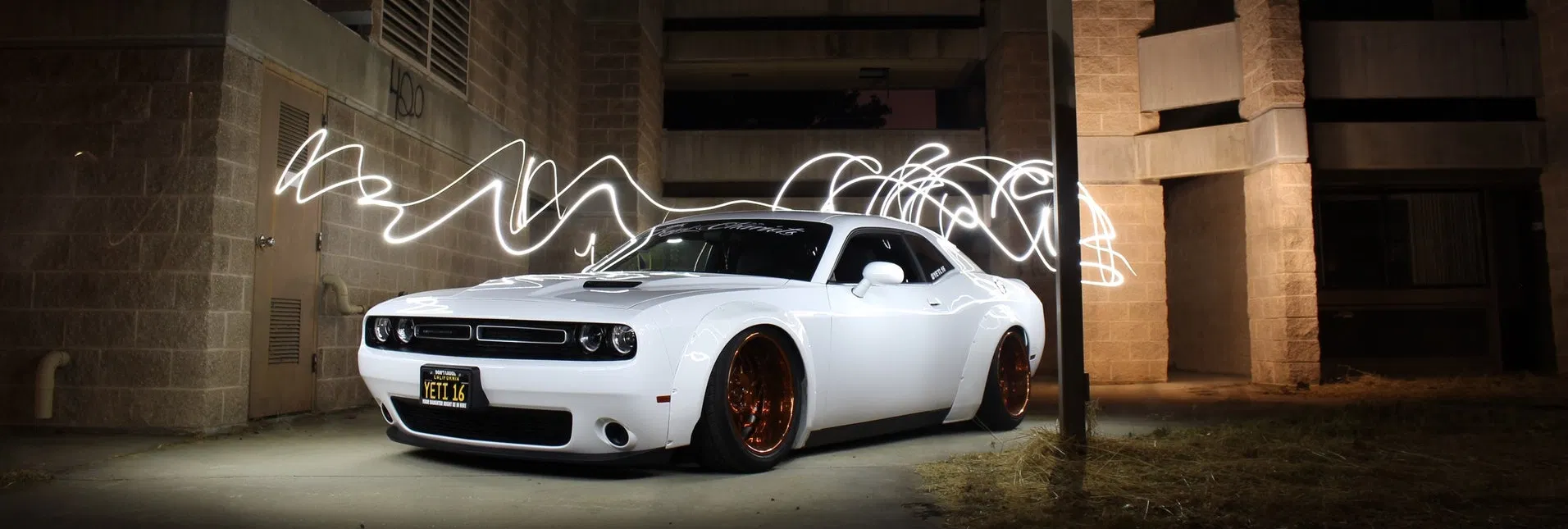
At DTX Performance, we specialize in the "Total Build." While we love talking brakes, we know that performance is a balance. If you've upgraded your stopping power, it might be time to increase your "go" power too. Check out our selection of Nitrous Systems or enhance your aerodynamics with a carbon fiber spoiler to keep that rear end planted during high-speed braking.
The Final Verdict
Do you really need a 6-piston kit?
If you’re building a show car or a mild street cruiser, stick with a high-end 4-piston upgrade and spend the saved money on a high-flow intake.
But, if you’re building a monster: if you’re pushing 800 horsepower, hitting the track, or demanding the absolute best in safety and performance: the 6-piston BBK is the only way to go. The improved heat dissipation, pad wear, and pedal modulation aren't just features; they are the difference between a successful day at the track and a very expensive call to a tow truck.
Shop with Confidence
Stop guessing and start building. Whether you're looking for the ultimate braking setup or the best modern muscle performance parts shop for your next engine upgrade, DTX Performance has your back. We promise to only send you the good stuff: the parts we’d run on our own rigs.
Ready to upgrade?
- Build your dream setup.
- Select your vehicle.
- Push the limits of what your modern muscle car can do.

If you have questions about fitment or which piston count is right for your specific build, don't hesitate to reach out. We’re here to help you build a car that doesn’t just look fast: it performs.
Shop DTX Performance today and stop on a dime tomorrow.


