 BUY NOW, PAY LATER. Starting at 0% APR


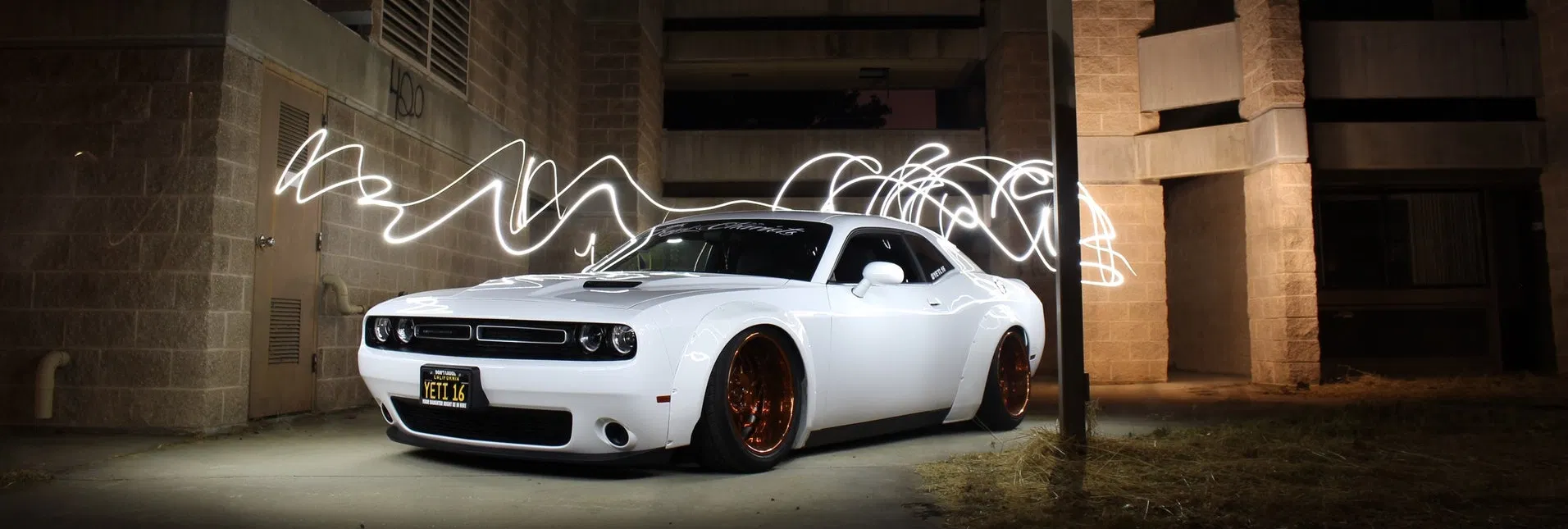
You’ve seen them on the highway: the modern muscle cars that look like they’re carrying a collapsed star in their grille. It’s the LED revolution. While modern LED technology has transformed the way we see the road, there is a massive difference between a high-performance lighting setup and a dangerous, blinding mess.
At DTX Performance, we focus on precision. Whether it’s a track-ready Camaro or a street-dominating Challenger, your lighting should be an asset, not a liability. If you’re shopping for LED lights, you need to look past the marketing fluff. "Brightest" is a buzzword; "Pattern" is the reality.
The Lumen Myth: Why More Isn’t Always Better
The biggest misconception in the automotive lighting world is that more lumens equals more visibility. In the world of high-performance parts, we love big numbers: horsepower, torque, and RPM. But when it comes to LED lights, the raw lumen count is only half the story.
A standard halogen bulb pushes roughly 1,000 lumens. High-end factory LEDs sit around 10,000 lumens. Then you see the "budget" aftermarket bulbs claiming 50,000 lumens. Here is the problem: Lumens measure total light output, not light placement.
If those 50,000 lumens are scattered everywhere: into the trees, into the eyes of oncoming drivers, and directly onto the asphalt three feet in front of your bumper: you haven't actually improved your vision. You’ve just created a wall of white glare that causes your pupils to constrict, making it harder to see distant hazards.
Candela vs. Lumens: The Real Performance Metric
If you want to build a lighting setup that actually works at 100 MPH, you need to talk about Candela.
- Lumens: The total amount of light leaving the source.
- Candela: The intensity of the light in a specific direction.
Federal regulations focus on candela because that’s what determines how far down the road you can see. A 10,000-lumen bulb with poor optics will be outperformed by a 2,000-lumen bulb with a precision-engineered projector every single time.

The Blinding Truth: How Glare Kills Performance
Why does everyone hate "bright" LEDs? It’s not actually the brightness; it’s the glare. Glare happens when light is projected above the horizontal "cutoff line."
When you install a cheap LED bulb into a housing designed for a halogen filament, the light source is in the wrong place. Halogen reflectors are designed to capture light from a tiny, 360-degree glowing wire. LEDs are flat chips that emit light in a specific direction. When the light hits the reflector at the wrong angle, it bounces everywhere.
The Danger of Disability Glare
When you blind an oncoming driver, you’re creating "disability glare." Their pupils constrict, and they lose their night-adapted vision for anywhere from one to nine seconds. At 60 MPH, that’s hundreds of yards of travel while being effectively blind.
For the driver behind the wheel of the over-bright car, the "hotspot" (the area of intense light right in front of the car) is often too bright. This causes your own eyes to adjust to the bright foreground, making the dark road ahead look even darker. You feel like you can see better because the road right in front of you is glowing, but your long-distance vision: the vision you need for high-speed driving: is actually compromised.
Select Your Setup: Reflector vs. Projector
To get the most out of your modern muscle car, you have to match the bulb to the housing.
- Reflector Housings: Common in older or base-model muscle cars. These use a mirror-like finish to bounce light forward. Drop-in LED bulbs are notoriously bad here unless they are specifically designed to mimic a halogen filament’s position exactly.
- Projector Housings: These use a lens to focus the light. This is the gold standard for LED performance. A projector allows for a razor-sharp cutoff line, ensuring the "brightest" light stays on the road and out of other people's mirrors.

The Color Temperature Trap
Many enthusiasts think "blue" means "modern" and "expensive." This has led to a flood of 8,000K and 10,000K LED lights on the market.
- 3,000K - 4,000K: Warm/Yellow (Excellent for fog and rain).
- 5,000K - 6,000K: Pure White (The sweet spot for human vision).
- 8,000K+: Blue/Purple (Poor visibility and high glare).
Scientific research shows that blue light is particularly disruptive to night vision. It causes more eye strain and doesn't reflect off road surfaces as effectively as white or slightly yellow light. If you want high performance, stay in the 5,000K to 6,000K range. This mimics natural daylight and provides the best contrast for spotting debris or animals on the road.
How to Pick the Right Beam Pattern
When shopping for LED lights on DTX Performance, look for products that emphasize "optical focus" and "beam precision." A high-quality beam pattern should have three distinct characteristics:
1. The Sharp Cutoff
There should be a clear horizontal line where the light stops. Above this line, there should be almost zero light. This protects oncoming drivers and ensures your light is being used where it matters: the pavement.
2. The Step
In left-hand drive countries (like the US), the cutoff line should "step" up on the right side. This allows you to see road signs and potential hazards on the shoulder without blinding drivers in the left lane.
3. Proper Hotspot Placement
The most intense part of the beam (the hotspot) should be located just below the cutoff line in the center. This provides the "throw" or distance you need for highway speeds.

Safety and Legality: DOT vs. Off-Road Use
It’s the wild west out there. Many LED bulbs you find online are labeled "For Off-Road Use Only." That’s usually because they fail to meet the strict beam pattern requirements of the Department of Transportation (DOT).
When you select your lighting upgrades, look for components that are engineered to meet or exceed OEM standards. Street-legal performance isn't just about avoiding a ticket; it's about ensuring your vehicle is predictable and safe for everyone on the road.
Build Your Performance Vision
Lighting is a critical component of the "Modern Muscle" experience. You wouldn't put cheap, unrated tires on a 700-horsepower car, so why put unrated, blinding lights in your housings?
Precision lighting allows you to push your vehicle harder at night with confidence. When you can see the apex of a corner or a pothole from a quarter-mile away, you have the edge.
Quick Tips for LED Installation:
- Aim Your Headlights: Even the best LED lights will blind people if they are aimed too high. After installing new bulbs or a suspension kit (which changes your car's rake), always re-aim your beams.
- Check the Cooling: High-output LEDs generate heat. Ensure your bulbs have high-quality heat sinks or fans to prevent premature failure.
- Clean Your Lenses: LED light is highly focused. Dirt or oxidation on your headlight lenses will scatter that light, creating glare and reducing your effective distance.
Shop High-Performance Lighting
Ready to upgrade? Don't just buy the "brightest" thing you find. Buy the setup that was engineered for your specific vehicle. We carry a massive range of performance parts designed to make your car faster, safer, and better-looking.
Explore our full inventory:
- Performance Lighting and Electronics
- Exterior Performance Upgrades
- Suspension Systems for the Perfect Stance
The DTX Promise
At DTX Performance, we don't do "filler." We don't sell junk. We focus on parts that deliver real-world results. Whether you’re looking for H&R Sport Springs to level out your ride or high-intensity LED systems to clear the way, we’ve got you covered.
Shop with confidence. We know the modern muscle world because we live in it. Our team is here to help you select the right parts the first time. No guesswork, no blinding glare: just pure, high-octane performance.
Reach out to our experts today or browse our sitemap to find exactly what your build is missing. We promise to only send you the good stuff. Let's get to work.

