 BUY NOW, PAY LATER. Starting at 0% APR


Master the Launch: The 1.3-Second Goal
In the world of modern muscle, the quarter-mile is won or lost in the first sixty feet. For heavy-hitting Mopars: Chargers, Challengers, and Hellcats: the challenge is physics. You are trying to launch 4,500 pounds of American engineering with enough violence to hit a 1.3-second 60-foot time without blowing the tires off or snapping an axle.
Achieving this requires more than just raw horsepower; it requires a calculated "Drag Pack" setup. This guide breaks down the essential wheel fitment, tire selection, and suspension tuning required to transform your Mopar into a legitimate track weapon. At DTX Performance, we specialize in the hardware that turns "spin" into "win."
Select Your Wheels: 17-Inch vs. 15-Inch Conversion
The first decision in any Mopar drag build is the wheel diameter. This choice dictates your tire sidewall, your braking capability, and your overall ET potential.
The 17-Inch Bolt-On Setup
The 17-inch rear wheel is the industry standard for street/strip Mopars. It is the largest diameter that allows for a decent sidewall while clearing the factory Brembo rear brakes on most Scat Pack and Hellcat models (excluding some Widebody configurations with larger rear rotors).
- Pros: Direct bolt-on; maintains factory braking performance; street-friendly.
- Cons: Limited sidewall flex compared to 15-inch setups; harder to achieve consistent 1.3s 60ft times on marginal tracks.
The 15-Inch Conversion
To join the elite 1.3-second club consistently, you need a 15-inch wheel. This requires a "15-inch conversion kit," such as those from Carlyle Racing or BMR Suspension. This conversion involves swapping to smaller rear rotors, specialized calipers, and modified suspension arms to clear the smaller wheel diameter.
- Pros: Massive tire sidewall (the "wrinkle" effect); superior traction; essential for high-horsepower builds (1,000+ HP).
- Cons: Significantly reduced rear braking power; requires mechanical modification.

Choose Your Brand: Weld Racing vs. Forgestar
When selecting wheels, weight and strength are non-negotiable. We recommend two industry leaders for the LX/LA platform.
Weld Racing: The Professional Standard
Weld Racing wheels, specifically the Weld S71 and S77, are the gold standard. They offer a forged construction that is incredibly light and strong enough to handle the torque of a modified Redeye or Demon. For those seeking the ultimate edge, the Weld V-Series provides a dedicated drag look and even lower rotational mass.
Forgestar: The Performance Value
Forgestar has disrupted the market with the D5 Drag Series. Using rotary forged technology, the D5 offers a lightweight, high-strength alternative at a more accessible price point. The Forgestar D5 is beadlock-compatible, which is a critical feature for cars running high boost levels to prevent the tire from spinning on the rim.
Select Your Rubber: Mickey Thompson vs. Nitto
Power is useless if it doesn't stick. Your tire choice is the single most important factor in your 60-foot time.
Mickey Thompson ET Street R
If your goal is a 1.3-second 60-foot, the Mickey Thompson ET Street R (Radial) is the undisputed king. It uses the legendary M5 compound that hooks hard and stays consistent. It is a "minimal tread" tire designed specifically for the drag strip but is technically D.O.T. approved.
Nitto NT555RII
For the daily driver who wants to drive to the track, the Nitto NT555RII is a formidable opponent. It offers better wet-weather performance and longevity than the Mickey Thompson, though it generally requires more heat and precise pressure management to match the 60-foot times of a dedicated race radial.

Build Your Suspension: Weight Transfer and Geometry
A Mopar that "squats" is a Mopar that loses. To hit a 1.3-second 60-foot, you need the car to transfer weight to the rear tires and maintain a flat, stable launch.
Rear Suspension Components
- Adjustable Control Arms: Swap factory rubber bushings for spherical bearings found in AAD Performance or BMR arms. This eliminates "wheel hop," which is the primary cause of broken axles and differentials.
- Anti-Roll Bars: A stiff rear anti-roll bar ensures the car lifts evenly. Without it, the car will torque to one side, unloading the opposite tire and causing a spin.
- Differential Braces: A non-negotiable for any Hellcat owner. A diff brace ties the differential to the subframe, preventing the housing from snapping under the violent load of a drag launch.
Shock and Strut Tuning
If you are running factory Bilstein adaptive suspension, use "Track Mode" to stiffen the rear and "Custom Mode" to soften the front. The goal is to allow the front end to rise easily (extension) while keeping the rear firm (compression) to prevent bottoming out. For dedicated builds, switching to double-adjustable coilovers allows you to fine-tune the "clickers" to match track conditions perfectly.

Precision Tuning: Managing the Launch
Modern Mopars are torque-limited by the factory ECU. Achieving a 1.3-second 60-foot requires a tuner who understands how to manage Torque Reserve and Launch Control.
- Stall Speed: If you have an aftermarket torque converter, you need to find the "sweet spot" where the turbo or supercharger is building boost without overpowering the brakes.
- Torque Management: A professional tune will allow for a more aggressive "hit" off the line while pulling just enough timing if wheel spin is detected.
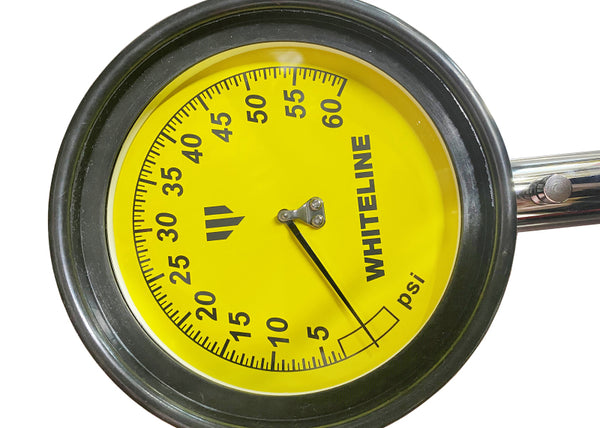
- Tire Pressure: Start at 18 PSI (warm) for Mickey Thompson radials and work your way down in 0.5 PSI increments until the car hooks. Never go lower than 12 PSI on a non-beadlock wheel.
Push the Limits with Front Runners
Don't overlook the front of the car. Heavy 20-inch factory front wheels act as a massive anchor. Switching to a 17x4.5 or 18x5 "Skinny" front wheel from Weld or Forgestar reduces rotational mass and improves weight transfer. This can shave nearly a tenth off your ET by itself.

Shop with Confidence at DTX Performance
Building a 1.3-second Mopar isn't about luck; it’s about the right parts and the right data. Whether you are looking for a bolt-on 17-inch setup or a full 15-inch conversion with beadlocks, DTX Performance has the inventory and the expertise to get you to the finish line first.
Explore our full range of performance components and hardware:
- Browse the DTX Performance Catalog
- Build Your Drag Pack: Select from Weld Racing, Forgestar, and Mickey Thompson.
- Reinforce Your Drivetrain: Shop differential braces and heavy-duty axles.
Conclusion: Results Matter
The difference between a 1.5-second and a 1.3-second 60-foot is the difference between a mid-10-second pass and a high-9-second pass. It requires a holistic approach to wheels, tires, and suspension. Focus on the 60-foot, and the rest of the track will take care of itself.
We promise to only send you the best gear to help you dominate the lanes. If you have questions about offset, backspacing, or brake clearance for your specific Mopar, reach out to our team. We are here to help you build a winner.
Push your Mopar to the limit. Build it right. Launch it hard.

