 BUY NOW, PAY LATER. Starting at 0% APR


The landscape of American muscle just shifted. If you’re sitting on a garage full of parts for your Scat Pack or Hellcat, wondering if they’ll bolt onto the 2026 Dodge Charger, you need to pay attention. The era of the HEMI V8 has taken a backseat to the high-tech, high-output 3.0L "SixPack" I6 Hurricane Twin Turbo.
At DTX Performance, we live for the build. We’re here to give you the hard truth: this isn't just a facelift. This is a complete architectural overhaul. Whether you are chasing 1,000 horsepower or just want the perfect street stance, understanding what carries over and what belongs in the classifieds is step one.
The Heart of the Change: Hurricane I6 vs. HEMI V8
For decades, the recipe was simple: displacement, pushrods, and a V-bank. The 2026 Dodge Charger throws that playbook out the window. The new 3.0L Hurricane engine is a masterpiece of modern engineering, featuring two low-inertia turbochargers and high-pressure direct injection.
Because the engine architecture has moved from a V8 to an Inline-6, zero powertrain components carry over from the previous generation.
If you have a set of long-tube headers for a 6.4L 392, they will not fit. The exhaust manifold for the Hurricane is integrated with the turbo housing, requiring a completely different downpipe and mid-pipe configuration. The days of the "Hemi Tick" are gone, replaced by the whistle of twin turbos.
 Pictured: American Racing Headers for the legacy 6.4L Hemi. These 4-pipe primaries are a work of art, but they won't clear the straight-six block of the 2026 model.
Push Power: The Turbo Advantage
The SixPack engine comes in two flavors: Standard Output (SO) and High Output (HO). Even in base form, these engines are designed to be more efficient and potentially more tunable than the naturally aspirated V8s they replace. However, the hardware is fundamentally different.
Shop with Confidence: If you are looking to boost your 2026 build, stop looking at "Classic Charger" parts. You need components engineered for the Hurricane platform.
Exhaust Systems: A New Tone for a New Era
One of the biggest questions we get at DTX Performance is about the sound. The roar of a V8 is iconic, but the scream of a twin-turbo I6 is a different beast entirely. Because the turbochargers act as a natural muffler, the exhaust routing and resonator tuning for the 2026 Charger are brand new.
Brands like MagnaFlow have already begun developing 3.0L-specific systems. These aren't just "cut and clamp" jobs. They are engineered to maximize the flow from the twin turbos while providing a aggressive, refined tone that suits the modern muscle aesthetic.
Build Your Sound:
- Legacy Parts: Will not fit.
- New Tech: Specifically tuned for L6 3.0L Sixpack engine harmonics.
- Focus: Low backpressure to allow the turbos to spool faster.
 Suggested Image: A close-up of a modern high-performance exhaust tip or the aggressive rear fascia of a performance sedan.
Intake and Cooling: Feeding the Turbos
Airflow is everything when you’re running boost. The 2026 Charger utilizes a sophisticated cold air intake system designed to feed those two low-inertia turbos.
While the concept is the same as previous generations, the physical footprint is not. The Hurricane engine sits differently in the engine bay, and the intake plumbing must navigate around intercooler piping and turbo heat shields.
 High-performance intake systems like this Roto-Fab unit show the level of precision required for modern muscle air management. Expect similar high-quality, USA-made options for the 2026 platform.
If you’re looking to push more power, cooling becomes your biggest hurdle. Intercooler upgrades will be the "first-look" mod for anyone serious about performance. Unlike the older HEMIs, where a bigger radiator was often enough, the Hurricane requires dedicated thermal management for the intake charge.
Suspension: Can You Keep Your Stance?
Here is where things get interesting. While the engine is all-new, the 2026 Charger still relies on a heavy-duty chassis designed to handle massive torque. However, because of the weight distribution changes: moving from a heavy V8 to a more compact, though still substantial, I6: the spring rates and damping profiles have changed.
If you have old suspension components, they likely won't provide the "perfect" drop or the handling precision required for this new platform. For example, while some rear stabilizer links from older Chrysler LX chassis platforms might look similar, the 2026 geometry is updated for better turn-in and high-speed stability.
Select Your Setup:
- Pedders 2005 Chrysler LX Chassis Rear Sway Bar – This was a staple for the older generation, but the 2026 will require a new iteration of this technology.
- Goal: Neutralize body roll without sacrificing the ride quality of the new electronic suspension systems.
We expect a wave of new coilovers and sway bars specifically valved for the 2026 weight bias. Don’t settle for "close enough" fitment. Your suspension is what puts the power to the ground.
Tuning: Cracking the Code
In the past, tuning a Dodge was a matter of unlocking the PCM and adjusting fuel maps. The 2026 model uses a more advanced electronic architecture. Companies like Burger Motorsports are already leading the charge with systems like the JB4, which can offer gains of up to 100 horsepower on the Scat Pack SixPack models.
The Direct Approach:
- Don’t try to use older handheld tuners.
- Do look for piggyback systems or new-gen PCM unlocks.
- Result: Instant torque and improved throttle response.
This is where the 2026 Charger will truly shine. Turbocharged engines respond to tuning much more aggressively than naturally aspirated ones. A simple software tweak can often net more power than thousands of dollars in bolt-ons for an older V8.
Wheels and Fitment: The One Carryover?
If there is one area where you might find some cross-compatibility, it’s the wheels. The 2026 Charger continues the trend of massive wheel arches and big brake clearances. While the bolt pattern and offset need to be verified, many enthusiasts are finding that high-end wheels like Forgestar or Weld remain the gold standard.
However, keep in mind that the 2026 features a new "Daytona" trim with specific aerodynamic wheel designs to reduce drag. If you’re swapping to a deep-dish or staggered setup, you’ll be trading some efficiency for that classic muscle look.
Action Plan:
- Measure: Check your brake caliper clearance.
- Fit: Ensure the offset doesn't rub the new fender liners.
- Select: Go for lightweight forged wheels to reduce unsprung weight.
Why You Shouldn’t "Force" Fitment
It’s tempting to try and make an old part work. We get it. Performance parts aren't cheap. But at DTX Performance, we prioritize excellence. Forcing a legacy intake or modifying an old exhaust to fit the 2026 Charger isn't just a headache; it can be dangerous.
The Hurricane engine relies on a complex network of sensors and pressure readings. A vacuum leak or an exhaust restriction can trigger limp mode or, worse, cause engine damage.
We promise to only send you good things. When we list a part for the 2026 Dodge Charger, it’s because it’s been verified to perform.
Build the Future of Muscle
The 2026 Dodge Charger is the start of a new chapter. It’s faster, smarter, and more tunable than anything that came before it. While your old HEMI parts might need to find a new home on an older project car, the potential for this new platform is limitless.
Push the boundaries of what an I6 can do. Build a car that handles as well as it pulls. Shop with the experts who know the difference between "fits" and "fits right."
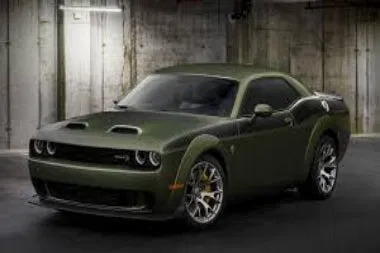 Modern muscle isn't about looking back; it's about looking forward. Whether it's a 2026 SixPack or a fully built SRT, the goal is the same: dominance.
Summary Checklist for 2026 Charger Owners:
- Engine Parts: Buy New (Hurricane specific).
- Exhaust: Buy New (Turbo-back systems).
- Tuning: Use JB4 or SixPack-ready modules.
- Suspension: Check geometry; expect new spring rates.
- Wheels: Verify offsets and brake clearance.
Ready to start your build? Keep an eye on the DTX Performance catalog as we roll out the latest components for the 2026 platform. The Hurricane is coming: make sure you're ready for the storm.
Shop DTX Performance. Build with Confidence.

